

SMART Hub Receives $1M Grant for National Spectrum Workforce Development
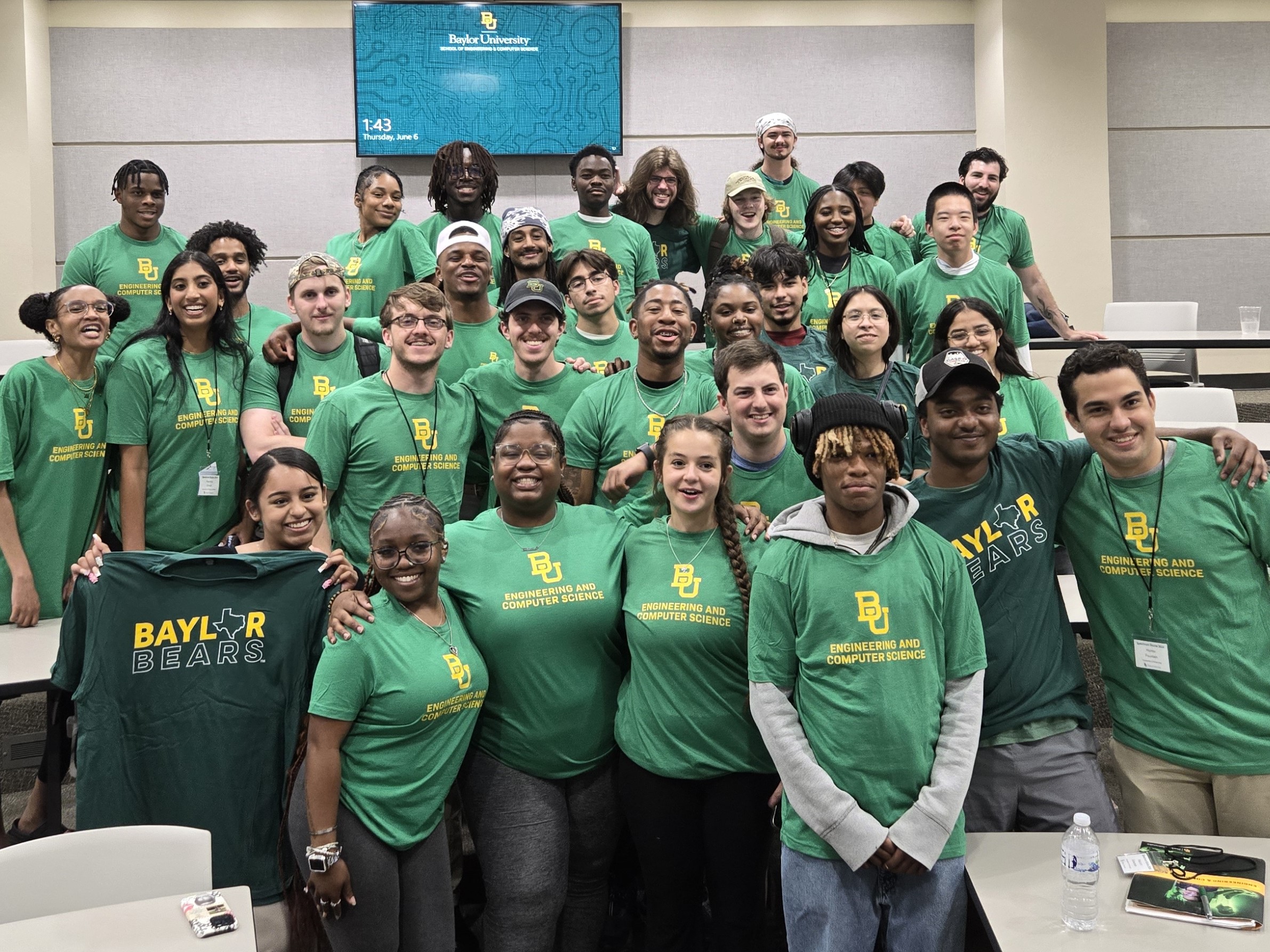
2024 Spectrum Sizzle participants wearing Baylor t-shirts at the end of the workshop.
WACO, TX (September 5, 2025) — The United States faces a growing shortage of professionals who can plan, manage, and innovate in the radio spectrum that powers everything from 5G/6G and Wi-Fi to satellite services, radar, and passive scientific systems. To help close this gap, SMART Hub has received a three-year, $998,293 award from the National Science Foundation to launch a national, cohort-based mentoring program that builds a robust pipeline of future spectrum practitioners.
Building on the highly successful Spectrum Sizzle undergraduate workshops (2023–2025), SMART Hub will expand Spectrum Sizzle into a nationwide program that trains students for spectrum careers, places them in internships, and supports graduates as they transition into full-time roles or pursue advanced degrees. University and industry partners will help host workshops, provide mentorship, and facilitate internship and research placements.
“I am elated that SMART Hub has been given the opportunity to raise up the spectrum workforce of the future,” said SMART Hub Director Charles Baylis, Professor of Electrical and Computer Engineering at Baylor University. “This project will be all about impacting the lives of participants, and through their lives, empowering our nation to win the global race for spectrum superiority.”
Four introductory Spectrum Sizzle workshops were held in Summer 2025 at SMART Hub campuses across the United States to attract new students into the program. Participants from these workshops are eligible to join the mentoring cohort and take part in additional workshops and career-development opportunities. Hands-on content areas include spectrum policy, wireless communications, radar, passive scientific systems, and circuits. The career-mentorship component features monthly virtual, cohort-based meetings with career specialists and spectrum experts from government, industry, and academia, along with student updates on interests and opportunities.
SMART Hub invites industry and government partners to support mentorship, employ program interns and graduates, and advise on workshop content.
“It’s an honor to help tackle our country’s shortage of spectrum practitioners and researchers,” said Dr. Adam Goad, program manager at SMART Hub. “Our work will keep the United States at the forefront of spectrum technology with the goal of delivering essential expertise to both the Department of Defense and the private sector.”
For information on participating as an undergraduate student, industry partner, or career mentor, visit https://spectrumsmart.org.